
About
Prof P.L.H. McSweeney PhD DSc MRIA is a leading dairy chemist and cheese scientist holding a Personal Chair in Food Chemistry in University College Cork, Ireland, where is also currently the university’s Vice-President for Learning and Teaching.
He has taught and researched dairy chemistry and cheese science for over 35 years.

The major thread running through his research is dairy enzymology and his research themes have included:
- The use of novel coagulants in cheese manufacture and the role of the coagulant in ripening;
- Study of proteolytic enzymes from lactic acid bacteria;
- Investigation of some of the many indigenous enzymes in milk;
- Acceleration and control the expensive process of cheese ripening;
- Novel aspects of proteolysis and lipolysis in cheese and including the many thousands of peptides that develop during ripening and the role of various enzymes in their production ;
- The equilibrium between casein-bound and soluble calcium on changes to cheese texture and functionality during ripening;
- The role of the adventitious non-starter microbiota on cheese quality;
- Studies on lactose and protein standardisation of milk and their effects on the resulting cheese;
- Investigation of traditional varieties that are often important locally and are of unique scientific interest.
He was awarded a PhD from the National University of Ireland in 1993 for a thesis entitled Primary Proteolysis of Caseins in Cheddar Cheese based on research conducted in University College Cork under the supervision of the late P.F. Fox and in the University of Wisconsin-Madison supervised by the late N.F. Olson. Paul was awarded the Marschall Danisco International Dairy Science Award of the American Dairy Science Association in 2004, a higher doctorate (DSc) on published work by the National University of Ireland (2009) and in 2025 was elected to the Royal Irish Academy, Ireland’s highest academic honour.
Books and Papers
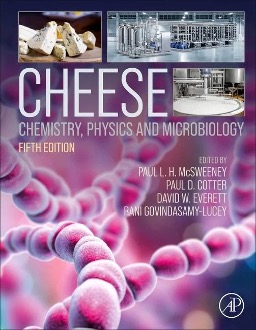
Paul McSweeney is the co-author or co-editor of 20 books and numerous research papers and reviews with a h-index of 88 with nearly 36,000 citations (Google Scholar; August 2026). He is lead editor of Cheese: Chemistry, Physics and Microbiology the most comprehensive single overview available of the chemical, biochemical, microbiological, and physico-chemical aspects of cheese. Published by Elsevier under its Academic Press imprint and in two volumes, this work covers the basic aspects of the science of cheese (vol 1) and cheese technology and the science specific to major varieties (vol 2). The most recent edition (5th edition) contains 45 chapters written by about 100 leading experts from universities, research centres and industry across the globe. As all chapters were written by prominent researchers for their peers and are heavily referenced, this work is firmly aimed at researchers, PhD candidates, and production management and control professionals in the cheese industry.
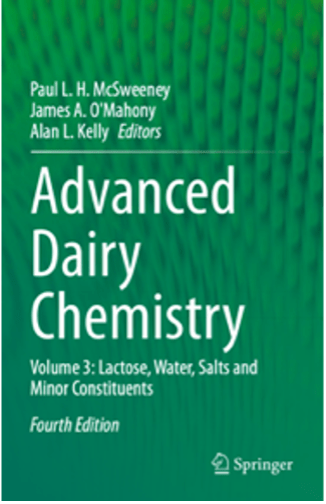
Prof McSweeney is also lead editor of the Advanced Dairy Chemistry series which has been the most comprehensive and detailed source of information on the subject since the 1980s. Published by Springer New York in four volumes (2013-2022), the 4th edition covers all aspects of dairy chemistry including milk proteins, lipids, carbohydrates and minor constituents. The fifth edition of this popular series is currently in preparation.
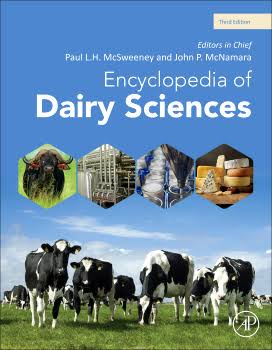
With 516 articles written by scientists from across the world and 4,878 pages in the print edition (5 vol set), the 3rd edition of the Encyclopedia of Dairy Sciences (2021; Editor-in-Chief: P.L.H. McSweeney) is the only work available that covers in such detail the entirety of the subject, from animal husbandry, through dairy processing to human health. Providing authoritative introductory articles, it has proven highly valuable to students and industry personnel worldwide.
Graduate-level short courses in dairy chemistry and cheese science and industry consultancy
I am available to deliver in-person graduate-level short courses in dairy chemistry and cheese science (typically two days) for PhD students and academics, researchers and industry personnel. I have delivered such courses previously in Italy, Argentina, Czech Republic, Turkey, Mexico, Chile, South Africa and the USA. Courses are delivered in universities usually arranged directly while those for industry are facilitated through UCC’s Food Industry Training Unit.
A major way I keep abreast of the challenges facing the cheese industry is through helping cheesemakers solve problems. I am always interested to hear from industry personnel and enjoy helping them work through problems informally by email, or more formally through structured industry consultancy.

Dairy chemistry short course
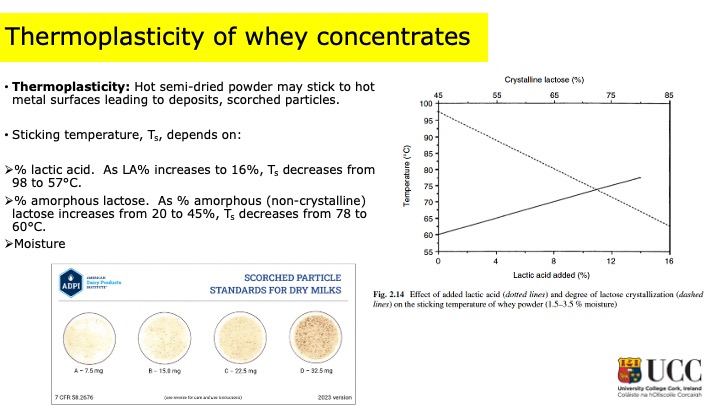
The basis of dairy science is a thorough understanding of the chemistry of milk. My 1-2 day short course on dairy chemistry has the objective of exploring milk as a highly complex biological fluid and covers topics such as evolution of milk, chemistry of lactose and lactose derivatives, milk lipids and the milk fat globule membrane, chemistry of whey proteins and of the caseins, casein stability, the milk salts system and changes that occur during processing, heat stability of milk and heat-induced changes to milk and the indigenous enzymes that occur in milk and the use of exogenous enzymes in dairy processing. While focussing throughout on the chemistry of milk rather than on technology, the impact of milk chemistry on practical aspects of dairy technology are touched upon, including drying, thermal processing and cheese manufacture.
Cheese science short course
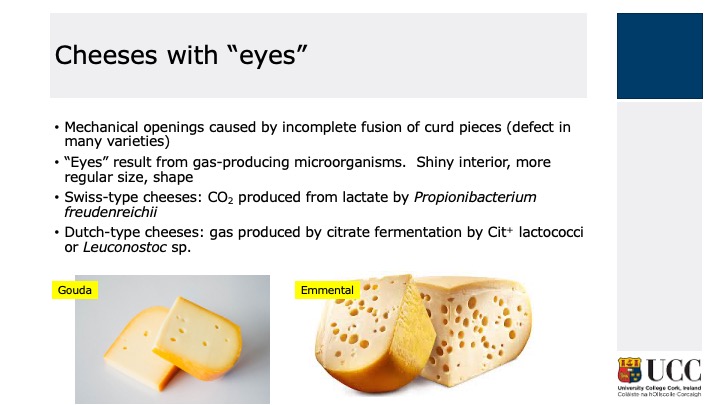
If cheese were invented today, it would be seen as a triumph of biotechnology – it is one of the world’s largest users of industrial enzymes, uses complex bacterial starter systems and, unlike most food products, is highly dynamic and changes extensively during ripening. Cheese is arguably the most scientifically challenging foodstuff and this short course (typically two days) provides learners with a very solid understanding of the science behind cheese manufacture and ripening. While focussing on industrial production of Cheddar and Mozzarella, this course covers all major varieties; topics discussed include history and evolution of cheese, dairy chemistry of relevance to cheese, milk pre-treatment, starters and acidification, acid and rennet gelation of milk, syneresis, cheddaring and the pasta filata step, salting and moulding, diversity of cheeses, biochemistry and microbiology of cheese ripening, cheese functionality, yield and efficiency, control of cheese composition, processed and analogue cheeses and acceleration and control of cheese ripening.
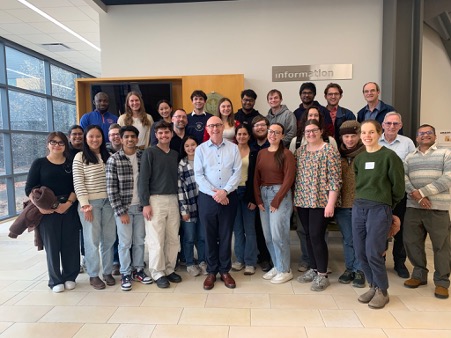
Cheese science course delivered in Utah State University (2025) to graduate students of the BUILD Dairy program.

